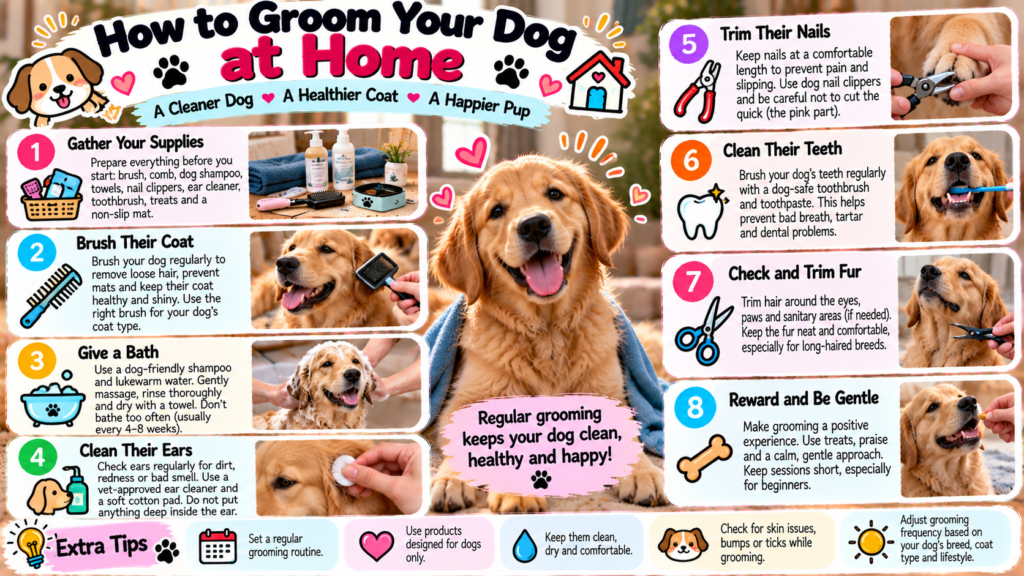
Grooming your dog at home is a useful way to keep its coat clean, maintain comfort, and notice possible skin or health problems early. Regular grooming also gives you an opportunity to build trust with your pet. Although some dogs need professional grooming, many everyday grooming tasks can be managed at home with suitable tools and a patient approach.
The right routine depends on your dog’s breed, coat length, age, and health. A short haired dog may need occasional brushing, while a long haired dog may require frequent brushing to prevent tangles. Understanding these differences helps you avoid unnecessary grooming and focus on what your dog actually needs.
1. Gather the Right Grooming Supplies
Before beginning, prepare the tools you need. Basic supplies may include a suitable brush, dog shampoo, towels, a non slip bath mat, a comb, and dog nail clippers if you are comfortable using them.
Choose tools designed for dogs. Brushes made for a short coat may not work well on a long or curly coat. If you are unsure which type to buy, ask a veterinarian or professional groomer for recommendations.
Keep grooming products in a safe place where your dog cannot chew or swallow them. Check the condition of your tools regularly and replace anything damaged.
2. Brush Your Dog Regularly
Brushing removes loose fur, helps prevent tangles, and spreads natural oils through the coat. It can also help you notice fleas, skin irritation, small wounds, or unusual lumps.
Short haired dogs often need less frequent brushing than long haired breeds. Dogs with curly or continuously growing coats may need more attention to prevent mats.
Start with gentle strokes and work in the direction of the hair growth. If you encounter a knot, do not pull hard because this can hurt the skin. Severe mats may need professional removal.
Make brushing a positive experience by keeping sessions short and rewarding calm behavior with praise or treats.
3. Bathe Your Dog When Necessary
Dogs do not all need baths on the same schedule. Bathing frequency depends on coat type, lifestyle, skin condition, and how dirty the dog becomes.
Use lukewarm water and a shampoo formulated for dogs. Human shampoo may not suit canine skin and can cause irritation.
Before bathing, brush the coat to remove loose fur and small tangles. Place a non slip mat in the bathing area so your dog can stand securely.
Wet the coat gently, avoiding direct water pressure around the eyes and inside the ears. Apply shampoo according to its instructions and rinse thoroughly. Leftover product can irritate the skin.
4. Dry Your Dog Safely
After bathing, use a towel to absorb excess water. Pat the coat rather than rubbing aggressively, especially if your dog has long hair that tangles easily.
If you use a pet safe dryer, choose an appropriate low heat setting and keep the airflow moving. Do not direct hot air onto one area for too long.
Some dogs become frightened by dryer noise. If your dog is uncomfortable, use towels and allow it to dry in a warm, safe room.
Do not leave your dog outdoors in extreme heat or cold while its coat is wet.
5. Trim Nails Carefully
Overgrown nails can become uncomfortable and may affect how a dog walks. Check your dog’s nails regularly and trim them when necessary.
Use nail clippers designed for dogs and remove only a small amount from the tip. Each nail contains sensitive tissue with blood vessels and nerves, often called the quick. Cutting into it can cause pain and bleeding.
If your dog has dark nails or you are unsure where to cut, ask a veterinarian or professional groomer to demonstrate the correct method.
Do not force a frightened dog to tolerate nail trimming. Gradual handling practice and professional assistance may be safer.
6. Look After Your Dog’s Ears
Check your dog’s ears periodically for unusual redness, discharge, swelling, or odor. Some breeds are more prone to ear problems than others.
Clean the ears only when needed and follow veterinary advice about suitable products. Never insert cotton swabs or other objects deep into the ear canal.
If your dog repeatedly shakes its head, scratches its ears, or seems painful when the area is touched, contact a veterinarian. These signs may indicate an infection, irritation, or another problem that grooming alone cannot resolve.
7. Maintain Dental Hygiene
Dental care is an important part of grooming. Plaque can build up on teeth and contribute to gum disease and discomfort.
If your dog accepts tooth brushing, use a dog specific toothbrush and toothpaste. Start slowly by allowing your dog to sniff the supplies and gradually introducing gentle contact with the teeth.
Never use human toothpaste unless a veterinarian specifically confirms it is safe, because some ingredients can be harmful to dogs.
Dental chews may help some dogs, but they do not replace brushing or professional dental care. Ask your veterinarian how often your dog’s mouth should be examined.
8. Make Grooming Comfortable
Choose a quiet place with good lighting and a surface where your dog can stand securely. Let your dog become familiar with the tools before using them.
Begin with short sessions and stop if your dog shows signs of distress, such as trembling, repeated attempts to escape, growling, or snapping. Punishing these signals may make grooming more frightening.
Reward small steps, such as allowing you to touch a paw or brush one side of the body. If your dog has a history of biting during grooming, seek professional guidance before attempting difficult tasks.
9. Watch for Skin and Coat Problems
Grooming gives you a chance to identify changes that may need attention. Look for bald patches, persistent scratching, redness, lumps, fleas, wounds, or an unusual odor.
Do not assume every skin problem is caused by poor hygiene. Allergies, parasites, infections, and other medical conditions can affect the coat.
Contact a veterinarian if you notice persistent irritation, painful mats, unexplained hair loss, or changes in your dog’s skin. Avoid applying human creams or home remedies without professional advice.
10. Establish a Regular Grooming Schedule
Create a schedule based on your dog’s needs. Brushing may be required several times a week or daily for some coats, while baths can be less frequent.
Check nails, ears, teeth, and skin as part of your normal care routine. Keep notes if your dog develops recurring tangles or skin problems so you can discuss them with a professional.
Consistency is more useful than occasional long grooming sessions. A little regular care can prevent problems from becoming harder to manage.
Conclusion
Grooming your dog at home can be a simple and rewarding routine when you use appropriate tools, gentle techniques, and patience. Brushing, bathing when needed, nail care, ear checks, and dental hygiene all contribute to your dog’s comfort.
Always consider your dog’s coat type and individual needs. If a grooming task causes pain, fear, or uncertainty, ask a veterinarian or qualified groomer for help rather than risking an injury.
SEO Details
SEO Title: How to Groom Your Dog at Home
Focus Keyword: how to groom your dog at home
Meta Description: Learn how to groom your dog at home with tips on brushing, bathing, nail trimming, ear care, dental hygiene, and choosing the right tools.
Suggested URL Slug: how-to-groom-your-dog-at-home