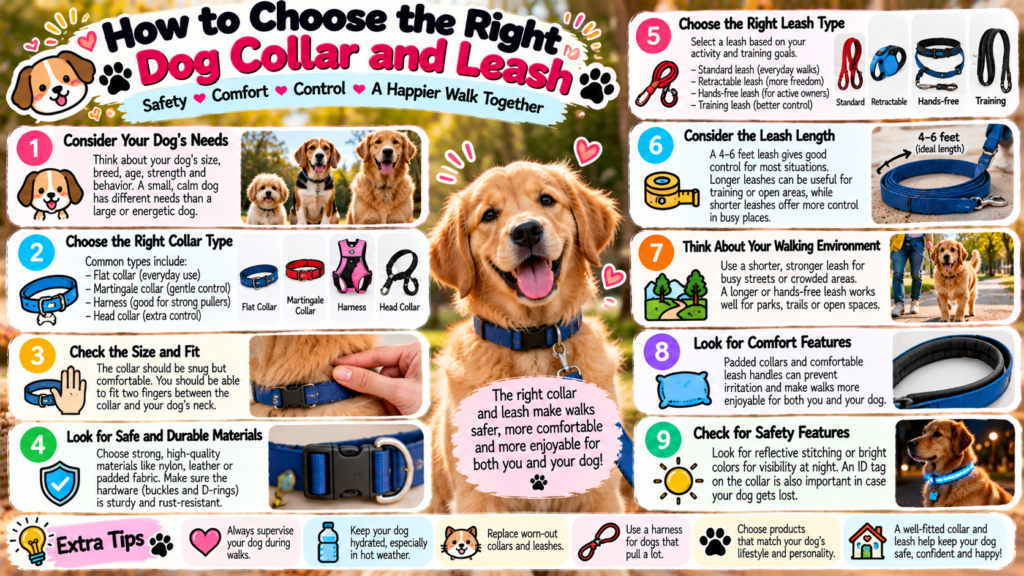
Choosing the right dog collar and leash is an important part of keeping your dog safe during walks, training, and everyday outings. The right equipment should fit comfortably, be strong enough for your dog, and give you suitable control without causing pain or restricting movement.
With so many products available, it can be difficult to know which option is best. The simplest approach is to consider your dog’s size, behavior, activity level, and individual needs before buying anything.
1. Understand the Purpose of a Dog Collar
A dog collar is commonly used to hold identification tags and may be suitable for attaching a leash for some dogs. It should fit securely without pressing against the throat or rubbing the skin.
Measure your dog’s neck according to the manufacturer’s instructions. As a general fit check for many flat collars, you should be able to slide two fingers between the collar and the neck without forcing them. However, fit depends on the collar design and the individual dog.
Check the fit regularly, especially for puppies that are growing quickly. A collar that fitted last month may now be too tight.
Never leave a collar that can catch on objects on a dog without supervision. In situations where snagging is a risk, a properly fitted breakaway collar may be safer, although it should not be used as a walking restraint unless specifically designed for that purpose.
2. Consider a Harness for Better Comfort
A harness distributes leash pressure across areas of the body rather than concentrating it around the neck. It can be useful for dogs that pull, have neck sensitivities, or need additional support during walks.
A well fitted harness should allow natural movement and should not rub behind the front legs. It should be secure enough that your dog cannot back out of it.
Some harness designs can restrict shoulder movement if they fit poorly. Observe your dog walking in the harness and check for rubbing, changes in gait, or signs of discomfort.
A harness does not automatically teach a dog to walk calmly. Positive reinforcement training is still important.
3. Choose a Suitable Leash Length
Standard walking leashes are available in different lengths. A shorter leash can help you guide your dog through crowded areas, while a longer leash can provide more freedom in open spaces where it is safe and permitted.
For everyday walking, many owners find a fixed leash of around four to six feet practical, although local rules and the dog’s behavior should guide your choice.
Long lines can be useful for recall training in suitable areas, but they require careful handling to prevent tangling and burns. Never wrap a long line tightly around your hand.
Retractable leashes offer extra range but can make it harder to manage sudden movement. They may be unsuitable for dogs that lunge, crowded footpaths, or places near traffic.
4. Select Strong, Comfortable Materials
Collars and leashes come in materials such as nylon, leather, and other manufactured fabrics. The best choice depends on durability, comfort, cleaning needs, and your dog’s habits.
Nylon is often lightweight and easy to wash. Leather may feel comfortable when properly maintained, but it needs care and can be affected by moisture. Whichever material you choose, inspect the stitching, clips, buckles, and attachment points regularly.
For a strong dog, choose equipment designed to handle its size and strength. Do not rely on appearance alone. A decorative leash with weak clips may not be suitable for everyday use.
5. Check the Buckles and Clips
The hardware is just as important as the material. Buckles should close securely, and leash clips should attach firmly to the collar or harness.
Check for rust, bending, loose stitching, fraying, and worn connection points. Replace damaged equipment rather than waiting for it to fail during a walk.
Before leaving home, confirm that the leash is attached correctly. Keep your dog away from traffic while checking or adjusting equipment.
6. Avoid Equipment That Causes Pain
Some products are marketed as quick solutions for pulling, but equipment that causes pain or fear can create additional behavior problems.
Avoid using collars designed to choke or deliver painful corrections without professional guidance. Prong collars and shock collars carry welfare concerns and are not necessary for teaching basic walking skills.
If your dog pulls strongly, lunges, or becomes frightened outdoors, consider working with a qualified reward based trainer or veterinary behavior professional. A properly fitted harness and gradual training may be more appropriate.
7. Introduce New Equipment Gradually
Some dogs feel uncomfortable wearing a harness or collar for the first time. Let your dog sniff the equipment and reward calm interest.
Place the harness on briefly, give a treat, and remove it. Gradually increase the time as the dog becomes comfortable. Avoid forcing the equipment over the head if that frightens your pet.
Once the dog accepts the equipment indoors, attach the leash and practice a few calm steps in a secure area.
Keep early sessions positive. If your dog repeatedly freezes, scratches at the equipment, or tries to escape, check the fit and slow down.
8. Think About Your Dog’s Specific Needs
A small dog may need lightweight equipment, while a large, strong dog requires durable materials and secure fittings. Dogs with short noses, delicate necks, or mobility concerns may benefit from specialist advice.
Puppies need equipment that can be adjusted as they grow. Long haired dogs may need collars checked frequently to prevent matting or rubbing.
For dogs that are fearful or reactive, avoid choosing equipment solely because it promises greater control. Fit, comfort, training, and safe handling all matter.
9. Add Identification and Safety Checks
A collar with current identification details can help someone contact you if your dog gets lost. Make sure the tag is secure and readable.
Microchipping provides another form of identification, but registration details should remain up to date. Follow local requirements for identification and leash use.
Before every walk, inspect the collar or harness, leash, and clips. Carry waste bags and stay alert to traffic, other animals, and hazards along the route.
Conclusion
Choosing the right dog collar and leash means balancing comfort, safety, durability, and control. Measure carefully, check the equipment regularly, and consider whether a collar, harness, or combination best suits your dog.
Remember that good equipment works alongside positive training. A comfortable fit and consistent practice can make walks safer and more enjoyable for both you and your dog.
SEO Details
SEO Title: How to Choose the Right Dog Collar and Leash
Focus Keyword: how to choose the right dog collar and leash
Meta Description: Learn how to choose the right dog collar and leash by considering fit, materials, leash length, harness options, comfort, and walking safety.
Suggested URL Slug: how-to-choose-the-right-dog-collar-and-leash