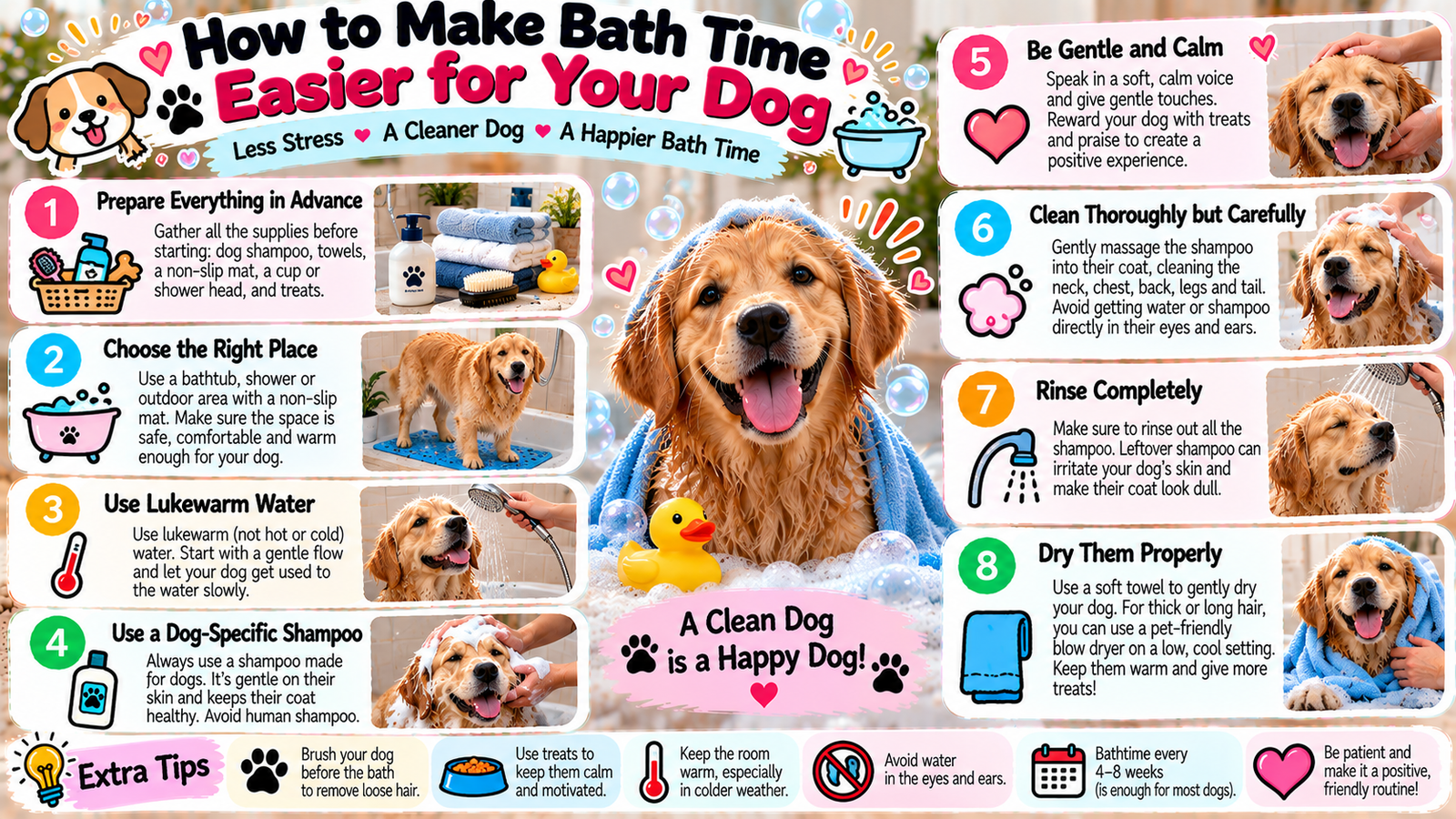
Bath time can be stressful for some dogs. They may dislike the sound of running water, feel uncomfortable on a slippery surface, or become nervous when their bodies are handled. For owners, the challenge is finding a way to keep the dog clean without turning every bath into a struggle.
The most effective approach is to make bathing predictable, gentle, and rewarding. With suitable preparation and patience, many dogs can learn to tolerate bath time more comfortably. The goal is not to force a dog to enjoy every part of bathing but to help it feel safe.
1. Prepare Everything Before the Bath
Gather your supplies before bringing your dog into the bathing area. You may need dog shampoo, towels, a non slip mat, a cup or gentle sprayer, and treats.
Choose a location that suits your dog’s size. A small dog may be comfortable in a suitable wash basin, while a large dog may need a bathtub or another safe washing area.
Remove nearby objects that could fall or break. Make sure the room is comfortable and that your dog has enough space to stand without slipping.
Preparing everything in advance helps prevent you from leaving a wet dog unattended while searching for supplies.
2. Brush Before Bathing
Brush your dog’s coat before getting it wet. Loose fur and small tangles can be easier to remove when the coat is dry.
If you find a tight mat, do not pull hard or cut close to the skin. Wetting a severe mat can make it more difficult to remove. Ask a professional groomer or veterinarian for help if the coat is heavily tangled.
Brushing before the bath also gives you an opportunity to check the skin for redness, wounds, parasites, or unusual lumps.
3. Introduce the Bathing Area Gradually
If your dog is nervous around the bathtub or shower, allow it to investigate the area while it is dry.
Reward calm behavior with praise or small treats. You can begin by letting the dog stand near the tub, then step inside it briefly if it is comfortable.
Introduce the sound of running water gradually and at a low level. Avoid suddenly placing a frightened dog under a strong stream.
For dogs with a history of panic during bathing, several short practice sessions may be more useful than attempting a complete bath immediately.
4. Use a Non Slip Surface
A slippery floor can make dogs feel insecure. Place a non slip mat on the bottom of the tub or washing area so your dog can stand steadily.
Support your dog without squeezing or restraining it unnecessarily. Keep one hand available to guide the dog gently, but do not put yourself at risk if the dog becomes frightened.
For a large dog, ask another responsible adult to help if needed. Never lift a heavy dog in a way that could injure either of you.
5. Use Lukewarm Water
Water that is too hot or too cold can make bathing unpleasant. Use lukewarm water and test it before wetting your dog.
Begin around the body and work gradually, avoiding a direct stream into the face, ears, nose, and eyes. Use a cup or gentle sprayer to control the water.
Speak calmly and offer rewards when your dog remains relaxed. If it begins to panic, pause when it is safe and give it a chance to settle.
6. Choose Dog Safe Shampoo
Use a shampoo formulated for dogs and suitable for your pet’s coat and skin. Human shampoo may irritate canine skin because its formulation differs from products designed for dogs.
If your dog has allergies, persistent itching, or a skin condition, ask a veterinarian which product to use. Medicated shampoos should be used according to professional instructions.
Avoid getting shampoo into the eyes or inside the ears. Follow the product directions and rinse thoroughly so residue does not remain on the skin.
7. Keep the Bath Short and Calm
A long bath can become tiring and stressful. Work efficiently but gently, using a predictable sequence so your dog knows what to expect.
Avoid sudden movements, loud noises, and unnecessary handling. Reward calm behavior throughout the process instead of waiting until the bath is finished.
If your dog becomes highly distressed, do not force it through a prolonged session unless there is an urgent contamination issue requiring immediate action. Seek help from a veterinarian or experienced groomer to develop a safer approach.
8. Rinse Thoroughly
Shampoo residue can irritate the skin, so rinse the coat thoroughly. Pay particular attention to areas where product can collect, such as beneath the legs or around the belly.
Use a gentle flow of water and avoid spraying directly into the face. If your dog dislikes water near its head, use a damp cloth to clean that area carefully.
After rinsing, check that the coat no longer feels slippery from shampoo. Follow the product instructions if a conditioner is used.
9. Dry Your Dog Comfortably
Use a towel to absorb excess water. Pat the coat instead of rubbing aggressively, especially if your dog has long fur that tangles easily.
If using a pet safe dryer, choose an appropriate low heat setting and keep the airflow moving. Some dogs are frightened by dryer noise, so introduce it gradually.
Keep your dog in a comfortable environment while it dries. Do not leave a wet dog outside in extreme heat or cold.
10. Reward Your Dog After Bathing
When the bath is complete, offer praise, a small treat, or a calm play session if your dog enjoys it. Let it shake off excess water in a safe area before drying it further.
Avoid scolding your dog for shaking, moving around, or trying to escape. These behaviors may be natural responses to bathing.
Record what worked well and what caused stress. The next bath may be easier if you adjust the water flow, bathing location, or duration.
Conclusion
Making bath time easier for your dog begins with preparation, a non slip surface, lukewarm water, suitable shampoo, and gentle handling. Short sessions and positive rewards can help your dog become more comfortable over time.
Do not force a frightened dog through repeated stressful baths. If bathing is consistently difficult or your dog has skin problems, ask a veterinarian or qualified groomer for guidance.
SEO Details
SEO Title: How to Make Bath Time Easier for Your Dog
Focus Keyword: how to make bath time easier for your dog
Meta Description: Learn how to make bath time easier for your dog with simple preparation, safe shampoo, gentle bathing techniques, and positive rewards.
Suggested URL Slug: how-to-make-bath-time-easier-for-your-dog