Finding scratches on a sofa, chair, or carpet can be frustrating for any cat owner. However, scratching is a natural behavior for cats. It helps them stretch, maintain their claws, leave scent marks, and communicate with their surroundings.
The goal is not to stop a cat from scratching completely. Instead, you can teach it to use appropriate scratching surfaces and protect your furniture at the same time.
Why Do Cats Scratch Furniture?
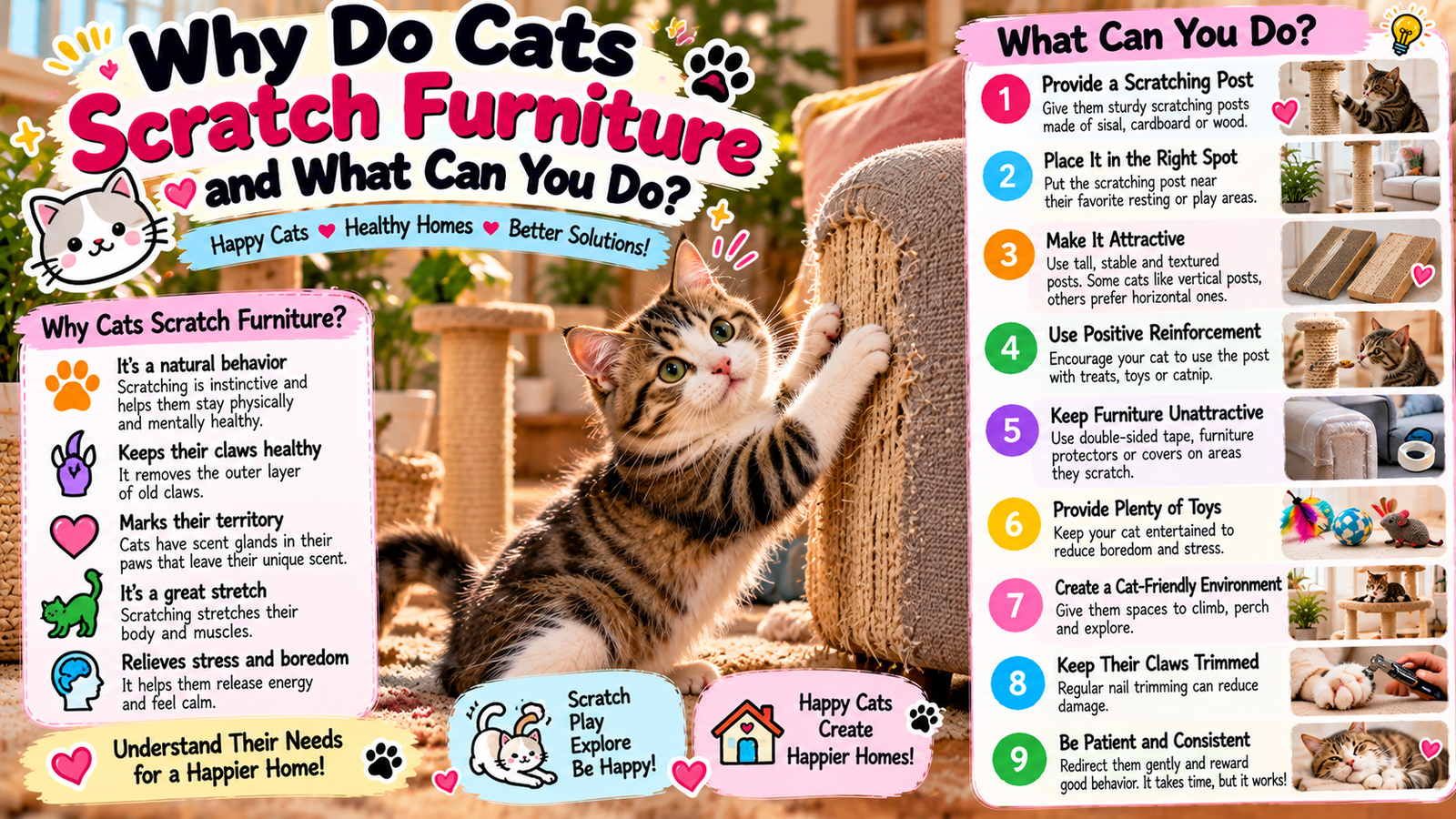
1. Scratching Is a Natural Instinct
Cats scratch to exercise their bodies and maintain their claws. During scratching, they stretch their shoulders, legs, and back. This activity is a normal part of feline behavior.
Even a well cared for cat with regular nail trims may still need to scratch. Providing suitable scratching surfaces is therefore essential.
2. Cats Mark Their Territory
Cats have scent glands in their paws. Scratching leaves both visible marks and scent signals in an area.
A sofa or chair may become a favorite target because it is located in a central part of the home or carries familiar household scents. Placing a scratching post nearby can provide a more suitable alternative.
3. The Texture May Be Appealing
Different cats prefer different scratching materials. Some like sisal rope, others prefer cardboard, carpet like textures, or sturdy fabric.
If your cat repeatedly scratches one particular piece of furniture, consider what makes its surface attractive. Choose a scratching post with a similar texture when possible.
4. Scratching Can Release Energy
Cats may scratch after waking up, during play, or when they feel excited. A scratching session can be part of stretching and releasing energy.
Daily play and suitable climbing opportunities can help provide a more complete activity routine.
How to Stop Cats From Scratching Furniture
1. Provide the Right Scratching Post
Choose a sturdy post that does not wobble when your cat leans against it. Many cats prefer a vertical post tall enough for a full body stretch. Others prefer a horizontal cardboard pad.
If possible, provide more than one type and observe which one your cat chooses.
2. Place the Post in the Right Location
Put the scratching post near the furniture your cat already scratches. You can also place one near a sleeping area because many cats stretch and scratch after waking.
A post hidden in an unused room may not attract a cat that prefers scratching in a busy part of the home.
3. Make the Post Appealing
Encourage your cat to investigate the scratching surface by playing nearby with a wand toy or rewarding voluntary use with praise or a small treat.
You can try catnip if your cat responds to it, although not every cat does. Avoid forcing your cat’s paws against the post because this may create a negative association.
4. Protect Your Furniture
Use suitable furniture covers or temporary protective materials on frequently scratched areas. Make sure any tape or cover is safe and cannot be swallowed.
Move the scratching post close to the problem area. Once your cat regularly uses the post, you can gradually move it if necessary.
5. Reward the Behavior You Want
When your cat uses an appropriate scratching surface, offer calm praise or a small reward. Consistent positive reinforcement helps the cat learn which areas are acceptable.
Avoid shouting, hitting, or spraying your cat with water. Punishment can cause fear and may not teach the cat what it should scratch instead.
6. Keep Your Cat’s Nails in Good Condition
Regularly check your cat’s nails. If trimming is needed, use proper cat nail clippers and trim only the sharp tip. Ask a veterinarian or qualified groomer to demonstrate the technique if you are unsure.
Nail trimming may reduce the damage caused by scratching, but it does not remove the underlying need to scratch.
What If Your Cat Suddenly Starts Scratching More?
Changes in scratching behavior may reflect a change in the home, a lack of suitable scratching surfaces, or increased stress. New pets, visitors, furniture, or changes in routine can affect a cat’s behavior.
Provide safe retreat areas and maintain predictable routines. If the behavior changes suddenly or appears alongside other signs of illness or distress, speak with a veterinarian.
Never declaw a cat as a routine solution to furniture damage. Declawing involves removing the last bone of each affected toe and can have significant welfare consequences. Appropriate scratching surfaces, training, and furniture protection are better options.
Conclusion
Cats scratch furniture because scratching is a normal part of their physical and behavioral needs. The most effective solution is to provide attractive scratching posts, position them strategically, protect furniture, and reward appropriate use.
With patience and consistency, you can help your cat develop better scratching habits without punishing natural behavior.
SEO Details
SEO Title: Why Do Cats Scratch Furniture and What Can You Do?
Focus Keyword: why cats scratch furniture
Meta Description: Discover why cats scratch furniture and learn practical ways to protect your home with scratching posts, positive reinforcement, and safe nail care.
Suggested URL Slug: why-cats-scratch-furniture